Industry and innovations
The automotive industry is experiencing its most transformative era since the introduction of the assembly line. Canadian drivers now navigate a complex landscape where vehicles are simultaneously becoming smarter, more connected, and subject to increasingly sophisticated regulatory frameworks. From software updates delivered wirelessly to your driveway, to provincial safety standards that adapt to new technologies, the intersection of innovation and regulation shapes every aspect of vehicle ownership.
Understanding these industry shifts isn’t just about keeping pace with technology—it’s about making informed decisions that affect your wallet, your privacy, and your safety. Whether you’re considering a modern classic as an investment, wondering about the data your connected car collects, or preparing for your next provincial inspection, this comprehensive overview connects the dots between emerging innovations and practical ownership realities across Canada.
The Evolution of Connected and Software-Defined Vehicles
Modern vehicles have transformed from mechanical machines into sophisticated computers on wheels. This shift introduces unprecedented capabilities, but also entirely new categories of ownership considerations that previous generations of drivers never faced.
Understanding Feature Subscription Models
Manufacturers increasingly offer vehicle capabilities through subscription-based features, fundamentally changing the concept of car ownership. Unlike traditional options you purchase once, these features require ongoing payments to unlock functionality already built into your vehicle’s hardware. Heated seats, advanced navigation, or performance enhancements might exist in your car but remain inaccessible without a monthly fee.
This model mirrors smartphone app subscriptions, but applied to a $40,000+ purchase. Canadian consumers should carefully evaluate which features are essential versus optional, and factor these recurring costs into total ownership calculations. Some features revert to basic functionality when subscriptions lapse, while others may be permanently locked to subsequent owners unless reactivated.
Over-the-Air Updates and the Risk of “Bricking”
Over-the-air (OTA) updates allow manufacturers to fix bugs, enhance performance, and add features without dealership visits. However, they introduce a concerning possibility: a failed update rendering your vehicle inoperable, colloquially known as “bricking.”
To minimize risks, consider these practical precautions:
- Ensure your vehicle has stable Wi-Fi connectivity and adequate battery charge before initiating updates
- Avoid interrupting updates once started, even if they take longer than expected
- Research whether your manufacturer offers dealer-assisted updates for major software revisions
- Check owner forums for reports of update issues before installing non-critical updates immediately
Canadian winters add another consideration—extreme cold can affect battery performance during lengthy updates. Many experts recommend scheduling major updates when your vehicle is garaged or in moderate temperatures.
Autonomous Driving: Understanding Current Capabilities and Real-World Limitations
Marketing materials often promise futuristic autonomy, but the reality requires tempering expectations with technical understanding. No consumer vehicle currently available in Canada offers true self-driving capability under all conditions.
Decoding Autonomy Levels: Level 2 vs. Level 3
The distinction between Level 2 and Level 3 autonomy fundamentally changes driver responsibility. Level 2 systems, which include most adaptive cruise control and lane-keeping features available in Canada, require constant driver supervision. You must keep hands on the wheel and eyes on the road, even when the system is active.
Level 3 autonomy, approved in limited jurisdictions under specific conditions, theoretically allows drivers to disengage from active monitoring during certain scenarios. However, the system must reliably alert drivers when it needs to hand back control—a handover process that introduces its own safety considerations.
Weather and Environmental Constraints
Canadian weather conditions expose significant limitations in current autonomous systems. Heavy snow obscures lane markings that cameras rely upon. Ice buildup on sensors degrades their effectiveness. Extreme cold affects battery performance in electric vehicles, reducing the computational power available for autonomous features.
Map-based autonomy systems struggle when physical conditions don’t match digital maps—a common occurrence during Canadian winters when snowbanks narrow lanes or parking lots become snow-covered expanses without visible boundaries. Driver monitoring systems also face challenges with winter clothing, particularly when heavy coats, scarves, or sunglasses interfere with camera-based attention detection.
Navigating Construction Zones and Temporary Changes
Autonomous systems excel in predictable environments but face significant challenges in construction zones where temporary signage and shifting lane configurations predominate. Cameras can read certain temporary signs, but distinguishing between active and obsolete signage requires contextual understanding current AI struggles to achieve.
Sensor overload situations occur when construction zones present contradictory information: faded permanent lane markings beneath temporary markings, or concrete barriers placed at angles that confuse spatial detection systems. The phenomenon of “tar snake” confusion—where road repairs create dark lines that cameras mistake for lane boundaries—demonstrates how systems optimized for ideal conditions falter when reality differs from training data.
Data Privacy and Security in Connected Automobiles
Every connected vehicle generates detailed data about driving habits, locations visited, and vehicle usage patterns. Understanding how this information flows, who profits from it, and how to protect your privacy has become essential for modern vehicle ownership.
How Manufacturers Monetize Your Driving Data
Vehicle manufacturers have discovered that data monetization can rival traditional parts and service revenue. Your driving patterns, braking habits, acceleration profiles, and location history hold significant commercial value for insurance companies, advertisers, and urban planners.
This data typically flows through telematics systems that communicate vehicle information back to manufacturers. Some of this collection serves legitimate purposes like recall notifications or roadside assistance. However, aggregated and anonymized data often gets sold to third parties, and the line between helpful connectivity and intrusive surveillance continues to blur.
The Risks of Syncing Personal Devices
Connecting your smartphone to a rental car or dealer loaner creates a surprising privacy vulnerability. Many vehicles retain contact lists, call logs, text message previews, and navigation history even after you’ve disconnected your phone. Subsequent drivers or dealership staff could potentially access this residual information.
Before returning any vehicle where you’ve synced your phone, take these steps:
- Delete your phone from the vehicle’s Bluetooth paired devices list
- Clear all saved destinations from the navigation history
- Review and delete any stored garage door codes or home addresses
- Factory reset the infotainment system if the option is easily accessible
Privacy Protections: Canada vs. United States
Canadian privacy laws offer stronger protections than American frameworks in several key areas. The Personal Information Protection and Electronic Documents Act (PIPEDA) requires organizations to obtain meaningful consent before collecting personal information, while provincial legislation in Quebec and British Columbia provides additional safeguards.
However, many vehicles sold in Canada use telematics systems designed for the broader North American market, potentially applying U.S. privacy standards by default. Canadian consumers should review privacy policies carefully and exercise available opt-out provisions, understanding that connectivity features and privacy protection often require balancing competing priorities.
Vulnerabilities in Keyless Entry Systems
Keyless entry and push-button start systems introduce convenience but also create opportunities for tech-savvy thieves. Relay attacks, where criminals amplify the signal from your key fob inside your home to unlock and start your vehicle outside, have become increasingly common in Canadian urban areas.
Practical countermeasures include storing key fobs in signal-blocking pouches, keeping them away from exterior walls, and utilizing steering wheel locks for high-value vehicles. Some manufacturers now offer sleep mode features that deactivate key fobs after a period of inactivity, requiring physical button presses to reactivate them.
Regulatory Compliance: Safety, Emissions, and Provincial Standards
Canadian vehicle regulations operate at both federal and provincial levels, creating a complex compliance landscape that varies by jurisdiction. Understanding these requirements helps avoid failed inspections and ensures your vehicle modifications remain street-legal.
Navigating Provincial Safety Inspections
Mandatory provincial safety inspections vary significantly across Canada. Some provinces require inspections only during ownership transfers, while others mandate regular periodic checks. Common failure points include brake wear, tire tread depth, suspension components, and structural rust—particularly relevant in provinces where road salt accelerates corrosion.
Window tint regulations exemplify provincial variation. While the federal government sets minimum standards, provinces establish their own rules regarding visible light transmission percentages. Ontario, for example, permits any tint on rear windows but requires the windshield and front side windows to allow sufficient light passage. British Columbia enforces different standards, and what’s legal in one province might fail inspection in another.
Rust and Structural Integrity Criteria
Canadian climate conditions make rust inspection criteria particularly important. Inspectors distinguish between surface rust and structural deterioration. Rust holes in structural components like frame rails or subframes typically result in immediate failure, while cosmetic surface rust on non-structural panels might pass depending on provincial standards.
The timing of your inspection matters—scheduling it before winter exposes your vehicle to months of road salt, while waiting until spring means the inspector sees maximum deterioration from the previous winter’s corrosion.
Emissions and Noise Compliance
Emissions regulations protect air quality, while noise bylaws address community concerns. These two regulatory streams often intersect when considering aftermarket modifications. The consequences of “deleting” emissions systems extend beyond environmental impact—they typically void warranties, fail inspections, and can result in significant fines.
Catalytic converter theft has risen dramatically across Canada, driven by precious metal prices. Beyond the immediate replacement cost, operating without a catalytic converter violates emissions regulations and creates an inspection failure. Many insurance policies now specifically address cat converter theft given its prevalence.
Local noise bylaw enforcement varies from stringent municipal patrols to complaint-based systems. Aftermarket exhaust components must comply with both federal noise limits and provincial inspection standards. Performance enthusiasts should verify that any modifications include proper certification to ensure aftermarket parts compliance with applicable regulations.
The Modern Classic Car Movement: Investment and Preservation
Modern classics—vehicles from the 1980s through early 2000s—represent a sweet spot between analog driving experience and reasonable usability. Their investment potential has attracted attention across Canada, but successful ownership requires understanding market dynamics, preservation challenges, and realistic cost expectations.
Market Trends and Investment Potential
Certain modern classics have appreciated significantly, particularly models with limited production runs, manual transmissions, or motorsport heritage. The Canadian market follows global trends but with unique considerations—right-hand-drive JDM imports legal after 15 years, for example, or appreciation of Canadian-market-specific models.
Investment potential depends on multiple factors: originality, mileage, documentation, and condition. Unlike traditional investments, classic cars require ongoing maintenance spending, appropriate storage, and insurance costs that eat into potential returns. They’re best viewed as passion purchases that might appreciate, rather than guaranteed financial instruments.
Importing and Registering Classic Vehicles
Importing classic cars to Canada involves federal regulations administered by Transport Canada and the Registrar of Imported Vehicles (RIV), plus provincial registration requirements. Vehicles 15 years or older generally qualify for importation without meeting current safety standards, opening opportunities for enthusiasts seeking models never officially sold in Canada.
The process requires careful documentation: original title, bill of sale, recall clearance letters, and compliance with provincial tax collection. Some provinces charge PST or RST on the vehicle’s current value, others on the purchase price, creating significant cost variations depending on where you register.
Canadian-Specific Preservation Challenges
Preserving investment vehicles in Canada means battling the country’s harshest enemy of classic cars: rust. Road salt, freeze-thaw cycles, and humidity create perfect conditions for corrosion. Hidden damage in vintage cars often lurks behind cosmetic repairs, inside rocker panels, or under undercoating that traps moisture.
Winter storage optimization becomes critical for preserving value. Climate-controlled storage prevents condensation, fuel stabilizers protect against varnish buildup, and battery maintainers prevent discharge. Many serious collectors consider winter storage costs non-negotiable for protecting six-figure investments from a single season’s salt exposure.
Realistic Ownership Cost Comparisons
Comparing maintenance costs between modern classics and new sports cars reveals counterintuitive economics. While modern classics lack warranty coverage and require specialized knowledge, their simpler systems often cost less to repair than contemporary vehicles packed with sensors and computers.
A failed ABS module in a modern classic might cost $300 to repair. The equivalent failure in a current model could exceed $2,000 due to integration with traction control, stability systems, and advanced driver assistance features. However, older vehicles require more frequent maintenance intervals and consumable replacements that newer cars have engineered away.
Sustainable End-of-Life Vehicle Management
Every vehicle eventually reaches the end of its useful life. How Canadian owners handle vehicle disposal affects both their wallets and environmental outcomes. Understanding available options enables informed decisions that maximize value recovery while meeting environmental responsibilities.
Understanding Scrap Value and Recycling Markets
Scrap car values fluctuate with commodity metal prices. The same vehicle might fetch $200 during low steel prices or $500 when markets peak. Hazardous materials in old cars—including mercury switches, lead batteries, and various fluids—require proper handling under provincial environmental regulations.
Licensed auto recyclers must follow depollution procedures before crushing vehicles, safely removing and disposing of refrigerants, oils, coolants, and other contaminants. This regulatory compliance costs recyclers money, which affects the prices they offer for end-of-life vehicles.
Selling for Parts vs. Scrapping Whole
Vehicles with valuable components might return more money parted out than sold whole to scrap yards. High-demand parts like engines, transmissions, or body panels from collision-free vehicles can collectively exceed scrap value. However, this approach requires time, space, knowledge, and eventual disposal of the remaining shell.
Consider parting out when your vehicle represents a desirable model, contains expensive components in good condition, or includes parts no longer manufactured. The effort makes less sense for common vehicles with mechanical failures that affect their most valuable components.
Charitable Donation Considerations
Donating vehicles to registered charities offers a tax receipt alternative to selling, though recent tax regulation changes have reduced the financial benefit. Charities typically either use donated vehicles directly, sell them at auction, or scrap them, with your tax receipt reflecting the actual proceeds rather than assessed value.
The donation process requires transferring ownership properly, completing provincial paperwork to confirm the vehicle left your possession, and obtaining proper charitable donation receipts that comply with Canada Revenue Agency requirements. This protects you from liability if the charity fails to register the transfer promptly.
The automotive industry’s rapid evolution creates both opportunities and challenges for Canadian vehicle owners. From connected car privacy considerations to autonomous system limitations, from regulatory compliance to classic car preservation, staying informed empowers better decision-making. Whether you’re optimizing your current vehicle’s settings for privacy, preparing for a provincial inspection, or considering a modern classic investment, understanding how innovation intersects with practical ownership realities ensures you navigate Canada’s automotive landscape with confidence.

ADAS Confusion: When Your Car Misreads the Road
Your car’s ADAS failures are not merely due to dirt or bad weather; they are fundamental misinterpretations of an environment the system was not fully designed to comprehend. Systems mistake high-contrast tar-filled cracks for lane markings, triggering false alerts. Algorithms…
Read more
Trust but Verify: The Reality of Hands-Free Driving in Canada
Hands-free driving systems promise a relaxed commute, but the reality is they operate on a knife’s edge of ‘sensor brittleness’, especially on Canadian roads. These systems are easily confused by unpredictable scenarios like human construction flaggers and can be rendered…
Read more
Over-The-Air Updates: New Features or New Glitches?
The promise of an ever-improving car through software updates is often overshadowed by bricked systems, unexpected paywalls, and data privacy concerns. Environmental factors, especially Canadian winters, can critically impact update success. Manufacturers are shifting value from hardware to subscription-based software…
Read more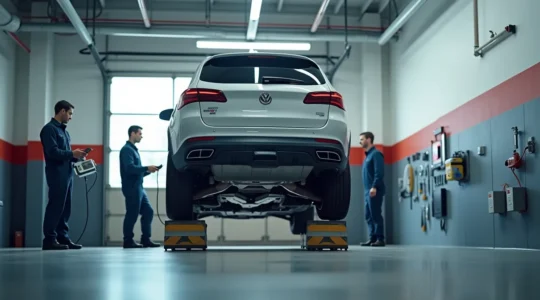
Canadian Exhaust & Noise Laws: A Compliance Officer’s Guide to Staying Legal
Navigating Canada’s vehicle compliance landscape is fraught with complex and often contradictory provincial rules. Many owners focus on avoiding simple noise tickets, but the real risks are far more severe, ranging from immediate vehicle impoundment and voided insurance to significant…
Read more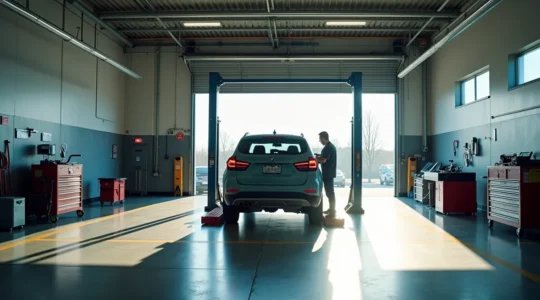
The Safety Certificate Guide: Selling or Buying a Used Car in Canada
In summary: A safety inspection is not just a checklist; it’s a financial decision point based on the principle of “immediate threat.” Structural rust perforation is an automatic failure, whereas surface rust is not. Understanding the difference is critical. A…
Read more
How to Dispose of an Old Car in Canada Responsibly and Legally?
Disposing of an old car in Canada is not just about removal; it’s a procedural process of asset liquidation and legal liability transfer. Maximizing value requires choosing between scrapping for cash, parting out key components, or donating for a significant…
Read more
Is Your Connected Car Spying on Your Driving Habits in Canada?
Your modern vehicle is not just a mode of transport; it’s an active node in a vast, unregulated data marketplace, and Canadian privacy laws offer a dangerously false sense of security. Automakers collect and sell far more data than necessary,…
Read more
Why Are 90s Japanese Sports Cars Skyrocketing in Value Across Canada?
The soaring value of ’90s JDM cars is not a nostalgia-fueled bubble; it’s a predictable market reaction to Canada’s unique position as a 10-year holding zone for future US-bound classics. Canada’s 15-year import law creates a crucial “arbitrage window” before…
Read more