
In summary:
- Idling your car in winter is a major fuel drain; a block heater offers significant savings for a minimal electricity cost.
- Smooth, predictive driving habits can reduce fuel consumption by up to 35% in city traffic.
- Timing your fill-ups to match weekly price lows can save hundreds of dollars annually.
- For suburban commuters, a Plug-In Hybrid (PHEV) can be the most cost-effective long-term choice when factoring in government rebates.
The familiar sting at the pump has become a daily reality for Canadian suburban commuters. With gas prices hovering over $1.60 per litre and the carbon tax steadily climbing, the 40km drive to work feels more expensive than ever. The internet is flooded with generic advice: check your tire pressure, remove a roof rack, or drive less. While not incorrect, these tips barely scratch the surface of the problem and often feel impractical for those whose livelihood depends on their vehicle.
These small tweaks can feel like placing a band-aid on a gaping wound. They fail to address the fundamental inefficiencies that drain your tank and your wallet. The frustration is real: you follow the rules, but your fuel bill continues to balloon, making you feel powerless against market forces and government policy. Many drivers resign themselves to this reality, believing it’s an unavoidable cost of suburban life in Canada.
But what if the key to substantial savings isn’t in these minor adjustments, but in a series of strategic, data-driven, and sometimes counter-intuitive decisions? This guide moves beyond the platitudes to reveal the hidden mechanics of fuel consumption. We will focus on specific Canadian contexts—like the brutal winter cold and unique vehicle rebates—to build a powerful strategy. It’s about shifting from passive fuel-saving « tips » to active « energy arbitrage » decisions that can genuinely cut your fuel bill by 20% or more.
This article will guide you through a logical progression of high-impact strategies. We will start by debunking common myths about vehicle care, then move to transformative driving techniques, and finally analyze the long-term financial wisdom of choosing the right vehicle for a suburban commute. Prepare to take back control of your fuel budget.
Summary: Your Roadmap to Slashing Fuel Costs in Canada
- Why idling your car for 20 minutes actually wastes $300 a winter?
- How using a block heater can save you fuel even in a gasoline engine?
- Regular vs Premium: Which one is truly cost-effective for a turbo engine?
- The driving habit that increases consumption by 35% in city traffic
- When to fill up: The weekly price cycle that saves $200/year
- Why does your 40km commute cost you $8,000 a year in hidden fees?
- Does the fuel saving justify the $5,000 price premium over a hybrid?
- Plug-In Hybrids: The Smartest Choice for Canadian Suburbs?
Why idling your car for 20 minutes actually wastes $300 a winter?
The Canadian winter ritual of « warming up the car » is a deeply ingrained habit. The common belief is that letting the engine idle for 15-20 minutes is necessary for the vehicle’s health and for a comfortable, defrosted cabin. However, this practice is one of the most significant and misunderstood sources of fuel waste. For modern engines, prolonged idling is not only unnecessary but also actively detrimental to both your wallet and the engine itself.
The math is startling. An engine doesn’t need more than 30-60 seconds of idling to get the oil circulating properly. After that, the most efficient way to warm it up is by driving gently. Leaving it to run in the driveway does little more than burn fuel. According to Natural Resources Canada, a 3-litre engine consumes about 300 millilitres of fuel for every 10 minutes of idling. If you idle for 20 minutes every workday for a 90-day winter, you’re looking at over 54 litres of wasted fuel, which can easily translate to $300 or more depending on your local gas prices and engine size.
Beyond the direct fuel cost, prolonged idling can accelerate engine wear. Because the engine isn’t operating at its optimal temperature, fuel may not combust completely, leading to residue buildup on cylinder walls. This can contaminate the oil and reduce the engine’s lifespan. The solution isn’t to endure the cold, but to adopt smarter, more efficient warm-up strategies.
- Idle for 30-60 Seconds: This is all you need for oil circulation. Start driving gently afterward.
- Clear Windows Manually: Don’t rely on the defroster during a long idle. Use a good quality scraper and brush.
- Park Facing East: A clever, no-cost trick. Use the morning sun to do some of the defrosting work for you naturally.
Ultimately, breaking the idling habit requires a mental shift from a perceived necessity to a recognized financial drain. The alternative is not only more economical but also better for your vehicle in the long run.
How using a block heater can save you fuel even in a gasoline engine?
If prolonged idling is the problem, the block heater is the strategic solution. Often associated exclusively with diesel engines in the harshest climates, a block heater is an incredibly effective fuel-saving tool for any gasoline vehicle in Canada’s winter. It represents a classic case of « energy arbitrage »: spending a small amount on electricity to save a much larger amount on gasoline. It directly combats the two biggest issues of a cold start: engine strain and extreme fuel inefficiency.
A cold engine is a thirsty engine. The vehicle’s computer injects extra fuel into the system to help it start and run smoothly until it reaches its optimal operating temperature. A block heater pre-warms the engine coolant, and sometimes the oil, tricking the car’s sensors into thinking the engine is already partially warm. This significantly reduces the amount of extra fuel needed during the first few minutes of driving. Research from CAA-Quebec demonstrates a fuel economy improvement of 15% to 33% in the first 20 kilometres of a trip when a block heater is used. It also reduces wear and tear on your engine and battery.
The economic case is compelling. A typical block heater draws between 400 and 1,000 watts. Running it for two to three hours before you leave (any longer provides little extra benefit) costs mere cents. The following analysis shows how this small electrical cost translates into substantial fuel savings over a winter season.
| Factor | Block Heater Cost | Fuel Savings |
|---|---|---|
| Hourly electricity cost | $0.05-$0.25/hour | – |
| 2-hour pre-heat cost | $0.10-$0.50 | – |
| Fuel savings per cold start | – | 10-15% reduction |
| Winter season total (90 days) | $9-$45 | $150-300 saved |
Using a timer to activate the heater automatically two hours before your departure maximizes convenience and efficiency. This simple, low-cost strategy directly counters the financial waste of idling and is a cornerstone of smart winter commuting.
Regular vs Premium: Which one is truly cost-effective for a turbo engine?
Standing at the pump, the price difference between regular (87 octane) and premium (91 or 93 octane) fuel presents a constant dilemma, especially for owners of modern vehicles with turbocharged engines. Many user manuals state that premium fuel is « recommended » but not « required, » leaving drivers to wonder if the extra 15-25 cents per litre is a worthwhile investment or a marketing gimmick. The truth is, for many modern turbocharged engines, using premium fuel isn’t about luxury; it’s a calculated decision for long-term efficiency and engine health.
Octane rating is a measure of a fuel’s resistance to « knocking » or pre-detonation. High-compression and turbocharged engines are more susceptible to this phenomenon. To prevent knocking when running on lower-octane fuel, the car’s computer will retard the ignition timing. This adjustment protects the engine but comes at a cost: reduced power output and, crucially, lower fuel efficiency. While you might save 10% on the price per litre by choosing regular, you could lose 5-10% of your fuel economy, effectively wiping out most of the initial savings.
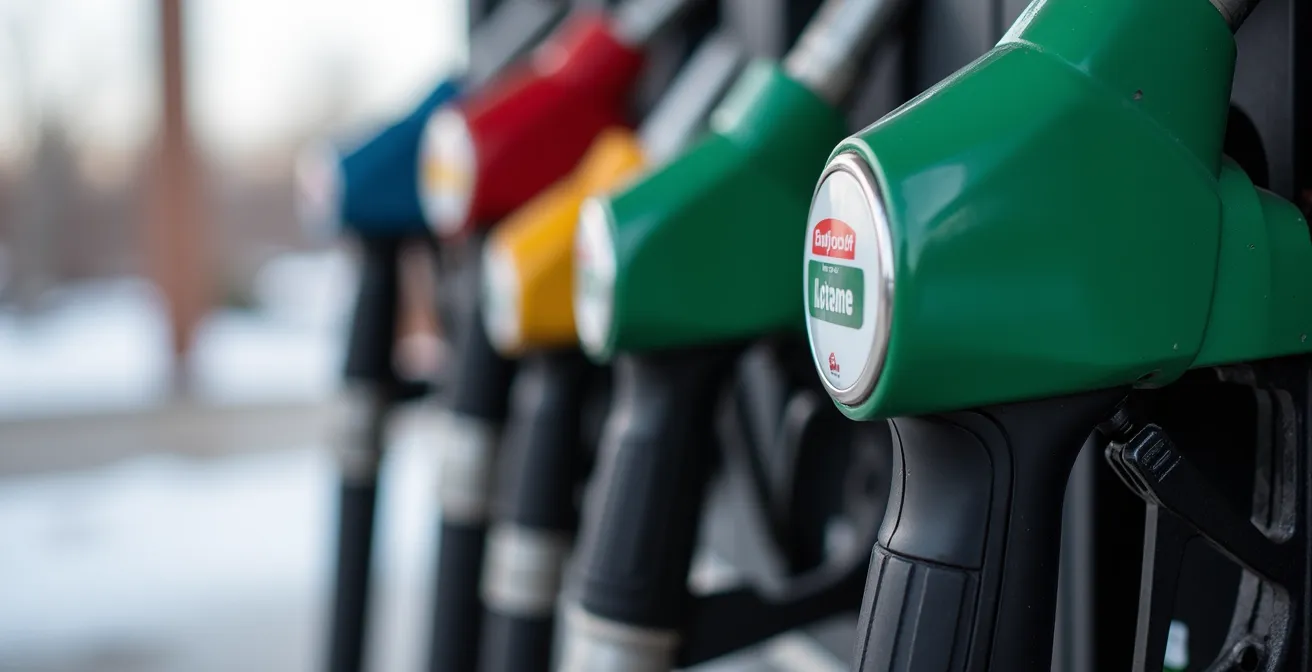
The real value of premium fuel in a « premium recommended » turbocharged car lies in allowing the engine to operate at its designed peak performance. The engine’s computer can advance the timing to extract maximum power and efficiency from each combustion cycle. Over thousands of kilometres, the slight increase in fuel economy can offset the higher price, making the cost-per-kilometre nearly identical, but with the added benefits of better performance and potentially a cleaner engine. It’s important to note this logic doesn’t apply to cars designed for regular fuel; using premium in a non-turbo, non-high-compression engine provides no benefit.
Furthermore, regional price variations, as noted in analyses of Ontario’s motor fuel prices, can influence this calculation. In areas where the spread between regular and premium is smaller, the case for premium becomes even stronger. The key is to test it for yourself: track your fuel economy over several tanks of each fuel type to determine the real-world cost-effectiveness for your specific vehicle and driving style.
For the suburban commuter with a modern turbo engine, « saving » money with regular gas can be a false economy. Paying for premium is often the more financially sound strategy for maximizing the efficiency you paid for when you bought the car.
The driving habit that increases consumption by 35% in city traffic
While vehicle maintenance and fuel choice are crucial, the single biggest factor influencing your fuel bill is the person behind the wheel. Aggressive driving—characterized by rapid acceleration, hard braking, and speeding—is the nemesis of fuel efficiency. It’s a habit that feels active and engaged but is fundamentally wasteful. Every time you slam on the brakes, you are converting forward momentum, which you paid for with gasoline, into useless heat.
The financial penalty for this driving style is severe. Studies consistently show that aggressive acceleration and braking can increase fuel use by up to 35% in stop-and-go city and suburban traffic. For a commuter spending $300 a month on gas, that’s over $100 wasted. The solution is to adopt a « predictive driving » mindset, a smooth and forward-thinking approach that prioritizes maintaining momentum over speed. It’s about looking far ahead, anticipating traffic flow, and making gentle inputs to the accelerator and brakes.
This isn’t about driving painfully slow; it’s about driving smarter. It means looking 12-15 seconds ahead to see traffic lights changing or cars braking, allowing you to coast to a stop instead of braking hard. It means leaving a safe following distance so you can modulate your speed gently rather than constantly reacting to the car in front. On the highway, using cruise control where appropriate helps maintain a steady speed, which is far more efficient than constant small adjustments. By turning driving from a reactive task into a predictive one, you minimize energy waste and maximize kilometres per litre.
Your Action Plan: Master Predictive Driving
- Gentle Starts: Take at least 5 seconds to accelerate to 20 km/h from a complete stop. This avoids the high fuel consumption of a jack-rabbit start.
- Anticipate Traffic: Look well beyond the car in front of you. Identify red lights, slowing traffic, or other hazards early to plan your deceleration.
- Coast to Decelerate: Instead of braking late, remove your foot from the accelerator as soon as you anticipate a stop. Let the car’s momentum do the work.
- Maintain Steady Speed: Avoid unnecessary acceleration and braking. On highways, use cruise control when traffic and weather conditions permit for optimal efficiency.
- Safe Following Distance: Leave enough space between you and the car ahead. This gives you more time to react smoothly to changes in speed, avoiding hard braking.
Adopting these habits not only slashes your fuel bill but also reduces wear on your brakes and tires, providing a double financial benefit. It transforms the daily commute from a frustrating battle into a smooth, efficient, and less stressful experience.
When to fill up: The weekly price cycle that saves $200/year
Most drivers fill up their tank when the needle hits empty, treating it as a chore dictated by the car’s needs. However, a strategic driver treats it as a planned purchase, timed to take advantage of predictable market fluctuations. Gas prices in Canada don’t move randomly; they often follow a discernible weekly pattern. Recognizing and exploiting this « weekly price cycle » can lead to significant annual savings with zero change to your driving habits.
While patterns vary slightly by region, a common trend across many Canadian cities is that gas prices tend to dip early in the week (Monday to Wednesday) and rise in anticipation of the weekend, peaking on Thursday or Friday. This is driven by station operators adjusting prices based on demand forecasts. By shifting your fill-up day from Friday to Tuesday, you might save 5-10 cents per litre. While this sounds minor, it accumulates. Saving 7 cents per litre on a 60-litre tank once a week is a saving of $4.20 per fill-up, or over $200 per year.
The key to this strategy is flexibility. Instead of waiting until your tank is nearly empty, start looking for gas when you’re at the half-full mark. This gives you a window of a few days to watch prices and choose the optimal moment to buy. Using price-tracking apps like GasBuddy can help you identify local trends and spot the cheapest station on the right day. This turns a reactive chore into a proactive, money-saving strategy.
Here are some actionable tips to master this strategy:
- Track Local Prices: Use an app or simply observe prices at your local stations for a few weeks to learn your area’s specific weekly cycle.
- Fill Up Early to Mid-Week: Aim to buy gas on a Monday, Tuesday, or Wednesday to capitalize on the typical price dip.
- Avoid Weekend Fill-Ups: Prices are often highest from Thursday to Sunday due to increased demand for weekend travel.
- Combine with Loyalty Programs: Align your low-price fill-up day with any special discount days offered by your preferred gas station’s loyalty program for maximum savings.
This strategy perfectly embodies the core principle of this guide: achieving significant savings not through major lifestyle changes, but through smarter, more strategic decision-making in your existing routine.
Why does your 40km commute cost you $8,000 a year in hidden fees?
The visible cost of commuting is the number on the gas pump display. But the true cost of that daily 40km round trip is far greater and largely invisible. Fuel is just the tip of the iceberg. When you factor in the « hidden fees » of car ownership—depreciation, insurance, maintenance, and repairs—the financial picture changes dramatically. These costs are incurred every time you drive, whether you realize it or not.
The Canadian Automobile Association (CAA) provides sobering calculations on this topic. They estimate that the true cost of a daily commute can be staggering. When all factors are considered, a commuter with a 40km daily drive in a mid-size sedan could be spending thousands annually. In fact, depending on the vehicle, CAA calculates an annual cost that can exceed $8,000 just to own and operate the vehicle for that commute. Depreciation is the largest and most silent of these costs; your car loses value with every kilometre added to the odometer.
Understanding this Total Cost of Ownership (TCO) is fundamental to making smart financial decisions. It reframes the question from « How can I save on gas? » to « How can I lower the overall cost per kilometre of my commute? » This broader perspective opens up new avenues for savings. For instance, it highlights the immense financial benefit of solutions that reduce the total kilometres driven, such as carpooling. In a city like Toronto, if just a few more drivers shared their ride, the collective savings in operating and infrastructure costs would be immense.
For the individual commuter, this TCO awareness makes a compelling case for exploring more efficient vehicle options. A car with lower maintenance costs, better insurance rates, and slower depreciation can save you far more in the long run than a few cents per litre at the pump. This is where the math behind hybrid and electric vehicles starts to become particularly compelling, as they target not just the fuel cost, but the maintenance and sometimes even the depreciation side of the equation.
Recognizing these hidden fees is the first step. The next logical step is to analyze vehicle options that systematically reduce these costs, leading us directly to the modern hybrid dilemma.
Key Takeaways
- Strategic decisions like using a block heater and timing fuel purchases have a greater financial impact than generic tips.
- The Total Cost of Ownership (TCO), including depreciation and maintenance, is a more critical metric than fuel price alone.
- For Canadian suburban commuters, government rebates can completely change the financial viability of electrified vehicles like PHEVs.
Does the fuel saving justify the $5,000 price premium over a hybrid?
For the cost-conscious suburban commuter, the choice is no longer simply between a gas car and a hybrid. The rise of Plug-In Hybrid Electric Vehicles (PHEVs) has introduced a new, compelling option. A PHEV like the popular Toyota RAV4 Prime carries a significant price premium over its standard hybrid counterpart. The critical question is: can the enhanced fuel savings and government incentives overcome this initial sticker shock and make it the smarter financial choice?
The answer depends heavily on two factors: your driving habits and your province of residence. A PHEV offers around 50-70 km of pure electric range before its gasoline engine kicks in. For a suburban commuter with a 40km round trip, this is a game-changer. You can complete your entire daily commute on cheap, overnight electricity, reserving the gas engine for long weekend trips. This effectively eliminates most of your daily fuel costs, leading to much greater savings than a standard hybrid, which only assists the gas engine.
This is where the « TCO Tipping Point » comes into play, especially with Canadian government incentives. A federal iZEV rebate can slash up to $5,000 off the price of a new PHEV. Provinces like Quebec and British Columbia offer additional substantial rebates, which can wipe out the entire price premium over a standard hybrid. In these provinces, the PHEV becomes not just a long-term win, but an immediate financial advantage.
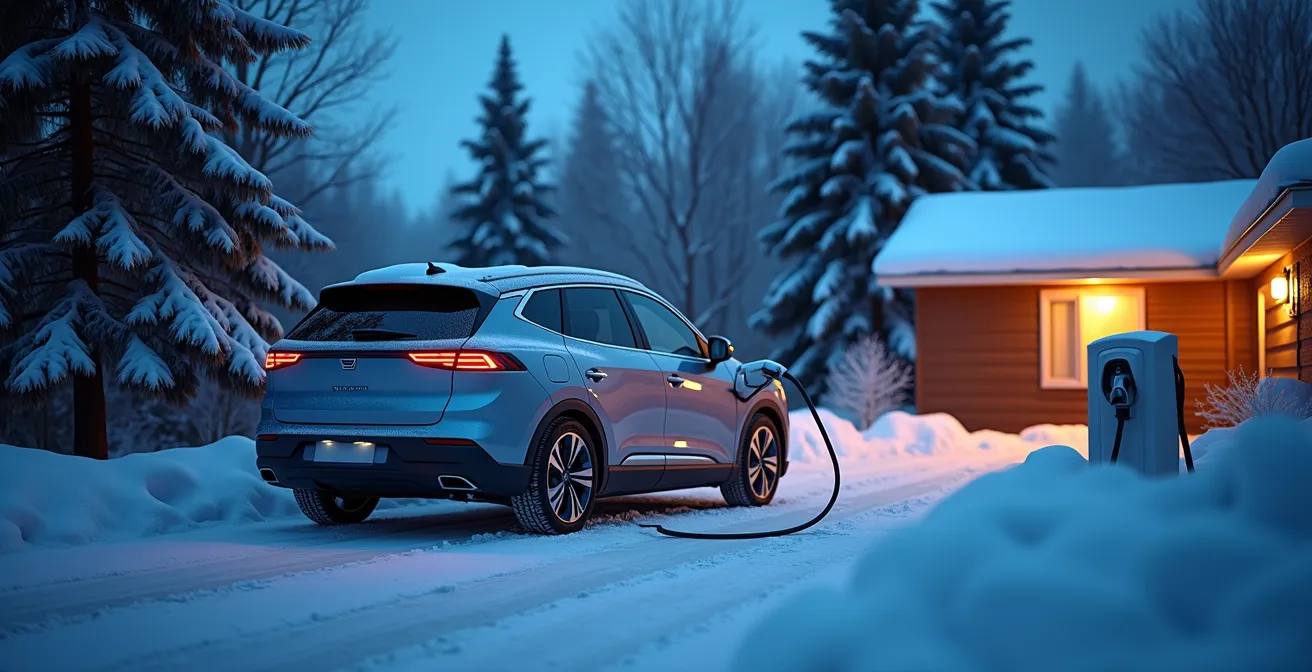
The table below breaks down the total cost comparison, illustrating how rebates fundamentally alter the equation. In provinces without additional rebates, a standard hybrid might still have a lower 5-year TCO, but for residents of QC or BC, the PHEV is the clear winner.
| Factor | PHEV (e.g., RAV4 Prime) | Hybrid (e.g., RAV4 Hybrid) |
|---|---|---|
| Price premium | +$5,000-8,000 | Baseline |
| Federal iZEV rebate | -$5,000 | $0 |
| Provincial rebates (QC/BC) | -$4,000 to -$7,000 | $0 |
| Annual fuel savings | $1,200-1,800 | $600-900 |
| 5-year TCO advantage | Better in QC/BC | Better in other provinces |
Therefore, analyzing the purchase through the lens of available rebates and your specific daily commute distance is essential. For many Canadian suburbanites, the PHEV isn’t just an environmental choice; it’s the most astute financial one available.
Plug-In Hybrids: The Smartest Choice for Canadian Suburbs?
After analyzing idling, driving habits, and the total cost of ownership, the evidence points towards a powerful conclusion: for the typical Canadian suburban commuter, the Plug-In Hybrid Electric Vehicle (PHEV) often represents the ultimate strategic solution to high fuel costs. It’s a technology that seems perfectly tailored to the suburban lifestyle of short daily drives combined with occasional long-distance travel, offering the best of both worlds without the « range anxiety » of a fully electric vehicle.
The genius of the PHEV lies in its dual nature. It operates as a pure electric vehicle for most daily errands—the school run, grocery shopping, the sub-60km commute—all powered by cheap grid electricity. This is where the most significant savings are realized. Data from Hydro-Quebec shows that driving 100km in an electric vehicle can be four times cheaper than in a comparable gas vehicle. Then, on weekends, it seamlessly transforms into a conventional hybrid for that long drive to the cottage or a family road trip, using its efficient gasoline engine without any need to plan for charging stations.
This flexibility is perfectly suited to Canadian geography and climate. The availability of All-Wheel Drive (AWD) on popular PHEV models like the RAV4 Prime ensures they are capable and safe during harsh winters. Most importantly, as we’ve seen, federal and provincial incentives can make the PHEV the most logical choice from a Total Cost of Ownership perspective, especially in provinces with generous rebates. It is the culmination of all the strategies discussed: a conscious act of energy arbitrage, a hedge against volatile gas prices, and a way to drastically cut the per-kilometre cost of driving.
- Electric for Daily Use: Cover most, if not all, of your daily commute and errands using only electricity.
- Gas for Long Trips: Enjoy the freedom of a gas engine for road trips without range anxiety.
- Maximize Rebates: Take full advantage of federal iZEV rebates up to $5,000, plus any available provincial incentives.
- Winter Ready: Choose AWD models that are well-suited for Canadian winter driving conditions.
Start implementing these strategic choices today and take back control of your fuel budget. By shifting your perspective from simply buying gas to actively managing your transportation energy costs, you can effectively neutralize the impact of rising prices and taxes.