Electric and hybrid vehicles
The shift toward electric and hybrid vehicles represents one of the most significant transformations in automotive history, and nowhere are the unique challenges and opportunities more evident than in Canada. With vast distances between communities, extreme temperature fluctuations, and a rapidly evolving charging infrastructure, Canadian drivers face distinct considerations when evaluating electrified transportation options.
This comprehensive resource explores the fundamental technologies behind electric vehicles (EVs), plug-in hybrids (PHEVs), and their practical implications for ownership across Canada’s diverse geography and climate zones. From understanding how frigid temperatures affect battery performance to identifying charging solutions in remote areas, we’ll examine the real-world factors that determine whether these vehicles align with your specific needs and driving patterns.
Whether you’re considering your first electric vehicle purchase or seeking to optimize an existing electrified vehicle’s performance, this foundation will equip you with the knowledge to make informed decisions and manage expectations throughout the ownership experience.
Understanding Electric and Hybrid Vehicle Technologies
Before diving into specific challenges and solutions, it’s essential to understand the fundamental differences between vehicle electrification approaches, as each serves distinct purposes and driving scenarios.
Battery electric vehicles (BEVs) rely entirely on electrical energy stored in rechargeable battery packs, with electric motors providing all propulsion. These vehicles produce zero tailpipe emissions and typically offer lower operating costs per kilometer, but depend completely on charging infrastructure availability. Popular examples in the Canadian market include the Tesla Model 3, Chevrolet Bolt, and Hyundai Kona Electric.
Plug-in hybrid electric vehicles (PHEVs) combine a rechargeable battery system with a conventional internal combustion engine, allowing drivers to complete shorter trips on electricity alone while maintaining the extended range capability of gasoline for longer journeys. This dual-powertrain approach addresses range anxiety, particularly relevant for Canadians traveling between widely separated communities.
Conventional hybrids (HEVs) use electric motors to assist the gasoline engine and capture energy during braking, but cannot be plugged in to charge externally. These represent the most conservative step toward electrification, offering improved fuel efficiency without requiring charging infrastructure or range planning.
Each technology presents distinct trade-offs in cost, complexity, environmental impact, and suitability for Canadian driving conditions—factors we’ll explore throughout the following sections.
EVs in Canada’s Climate: Navigating Cold Weather Challenges
Canadian winters present the single most significant challenge for battery electric vehicles, as lithium-ion battery chemistry operates less efficiently at low temperatures. Understanding these impacts allows owners to set realistic expectations and implement strategies to minimize range penalties.
Real-World Range Loss in Winter Conditions
When temperatures drop below freezing, EV drivers typically experience range reductions between 20% and 40% compared to optimal conditions. At -20°C to -30°C—common temperatures across the Prairies and northern regions—this loss can approach 50%. This reduction stems from multiple factors working simultaneously:
- Decreased battery chemical reaction efficiency in cold temperatures
- Energy diverted to heat the battery pack itself to optimal operating temperature
- Substantial cabin heating demands drawing directly from the battery
- Increased aerodynamic drag and rolling resistance in cold, dense air
A vehicle rated for 400 km in summer might realistically deliver only 240-280 km in harsh winter conditions. This isn’t a defect—it’s fundamental physics affecting all lithium-ion batteries.
Optimizing Cabin Heating to Preserve Range
Unlike gasoline vehicles that generate abundant waste heat, EVs must create cabin warmth using battery power, making heating systems one of the largest energy consumers in winter. Strategic approaches can significantly reduce this drain:
Preconditioning the cabin while still plugged in allows you to start your journey with a warm interior and full battery. Most EVs enable scheduled preheating through smartphone apps. Using heated seats and steering wheels rather than relying solely on cabin air heating consumes substantially less energy—these targeted heat sources can keep occupants comfortable while reducing overall heating demands by 30-50%.
Many modern EVs incorporate heat pumps, which move heat rather than generating it directly through resistance heating. In moderate cold (-10°C to 5°C), heat pumps can be two to three times more efficient than traditional resistance heaters, though their advantage diminishes in extreme cold when resistance heating becomes necessary.
Charging Infrastructure: Urban vs Rural Realities
The viability of EV ownership in Canada varies dramatically based on location, with infrastructure development concentrated in urban corridors while rural and remote communities face significant gaps.
Home Charging Requirements in Rural Areas
For rural Canadian residents, reliable home charging isn’t merely convenient—it’s often essential for practical EV ownership. Installing a Level 2 charging station (240V) at your residence requires several considerations specific to rural properties:
- Electrical service capacity: Many older rural homes operate on 100-amp service panels, which may require upgrading to 200 amps to accommodate a dedicated 40-50 amp charging circuit
- Distance from panel to parking location: Longer wire runs increase installation costs, sometimes substantially on acreages where vehicles park far from the main electrical panel
- Cold weather performance: Chargers and electrical connections must be rated for extreme temperatures and protected from moisture and snow accumulation
Installation costs typically range from $1,200 to $3,500 depending on these factors, though various provincial and federal incentive programs have historically offset portions of this investment. Level 2 charging delivers approximately 40-50 km of range per hour of charging—adequate for overnight replenishment of most daily driving needs.
Identifying Charging Deserts to Avoid
Despite expansion efforts, significant gaps remain in Canada’s public charging network. “Charging deserts” represent regions where public charging stations are separated by distances exceeding the winter range of many EVs, creating planning challenges or making certain routes impractical.
Northern Ontario, vast stretches of the Trans-Canada Highway through the Prairies, and most of Canada’s northern territories currently represent challenging territories for EV travel. Before purchasing an EV, map your regular long-distance routes using current charging network databases, applying conservative range estimates that account for winter conditions, highway speeds, and safety margins.
Coastal British Columbia, southern Ontario’s Highway 401 corridor, and major routes in Quebec generally offer the most developed charging infrastructure. However, venturing off primary highways quickly reveals gaps that gasoline vehicles navigate without consideration but that require careful route planning for EVs.
Plug-in Hybrids: Bridging Two Worlds
For many Canadian drivers, particularly those regularly traveling between urban and rural areas or facing uncertain charging access, PHEVs offer a compelling compromise that addresses range anxiety while still enabling substantial electric driving.
Understanding the Dual Powertrain
PHEVs maintain both a battery-electric system and a complete gasoline powertrain, adding complexity but providing flexibility. Most PHEVs offer electric-only ranges between 40-80 km—sufficient to cover typical daily commuting purely on electricity while reserving gasoline capability for longer trips.
This dual nature introduces unique considerations, including the “cold start” challenge where gasoline engines may run briefly during extreme cold to provide cabin heating or protect engine components, even when the battery has sufficient charge for propulsion. This behavior, while reducing electric-only efficiency in winter, ensures reliable operation at temperatures where pure EVs struggle.
Optimal Usage Patterns for Maximum Benefit
PHEVs deliver maximum value when drivers consistently charge the battery and complete most trips electrically, reserving gasoline for occasional longer journeys. Drivers who neglect charging effectively operate an inefficient gasoline vehicle burdened by the additional weight of an unused battery system.
The ideal PHEV candidate typically:
- Drives less than 60 km daily most days, matching electric-only range
- Has reliable home or workplace charging access
- Occasionally makes trips exceeding 200-300 km where gasoline range eliminates charging concerns
- Values flexibility and range security over maximum environmental benefit
Calculating the Break-Even Point
PHEVs typically cost $5,000-$12,000 more than equivalent conventional vehicles but less than comparable BEVs. The financial break-even depends on fuel savings realized through electric driving. A driver completing 80% of annual kilometers electrically might save $1,200-$1,800 annually on fuel, reaching break-even in 4-7 years depending on the initial premium and electricity rates.
However, drivers who rarely charge see minimal fuel savings while paying the premium for unused electric capability, never reaching financial break-even. This makes honest assessment of charging commitment essential before PHEV purchase.
Battery Health and Longevity: Protecting Your Investment
Battery packs represent the most expensive component in electric and plug-in hybrid vehicles, making understanding and implementing practices that preserve battery health crucial for long-term ownership satisfaction.
Charging Best Practices and Common Myths
One persistent myth suggests charging batteries to 100% maximizes value from each charging session. In reality, regularly charging lithium-ion batteries to full capacity accelerates degradation. Most manufacturers recommend limiting daily charging to 80-90% capacity, reserving full charges for trips requiring maximum range.
Similarly, allowing batteries to regularly discharge below 10-20% increases stress. The optimal operating range for longevity sits between 20-80% state of charge for daily use—a practice easily managed through charging schedule settings available in most EVs and PHEVs.
Fast DC charging, while convenient for road trips, generates significantly more heat than slower Level 2 charging. While modern battery thermal management systems protect against damage, frequent reliance on fast charging (multiple times weekly) can contribute to accelerated capacity loss over many years. Reserve fast charging for longer trips while relying on home Level 2 charging for daily needs.
Understanding Vampire Drain and Storage Considerations
Vampire drain refers to the gradual battery discharge that occurs even when a vehicle sits unused, as onboard systems maintain readiness for remote connectivity, security monitoring, and battery thermal management. Most EVs lose 1-3% of charge weekly when parked, though cold weather can increase this rate as the vehicle periodically warms the battery to prevent damage.
For extended storage periods—snowbird owners leaving vehicles for months or cottagers storing seasonal vehicles—maintaining charge between 50-60% and ensuring the vehicle can maintain this level minimizes degradation. Some owners in extreme climates shelter vehicles in heated garages during extended storage, while others arrange for periodic charging to offset vampire drain.
Recognizing Warning Signs of Battery Degradation
While gradual capacity loss (typically 2-3% annually) is normal, certain symptoms suggest accelerated degradation or failing battery modules:
- Sudden range drops significantly exceeding gradual decline patterns
- Inconsistent range predictions or charging behavior
- Warning messages regarding battery system faults or balancing issues
- Unusual heating or cooling system activity unrelated to ambient temperature
- Charging interruptions or failures to reach expected capacity
Modern EVs monitor individual battery module health, and deterioration typically affects specific modules rather than the entire pack simultaneously. Most manufacturers warrant battery capacity retention (typically 70-80% retention over 8-10 years), providing recourse if degradation exceeds normal parameters.
Comparing AWD Performance: Electric vs Gas
All-wheel drive capability holds particular importance for Canadian drivers navigating winter conditions, but the implementation differs substantially between electric and gasoline vehicles, each offering distinct advantages.
Electric AWD systems typically use separate motors for front and rear axles, enabling precise, instantaneous torque distribution between wheels without mechanical transfer cases or differentials. This computer-controlled distribution responds in milliseconds to slipping wheels, often before the driver perceives traction loss. The Tesla Model Y and Ford Mustang Mach-E demonstrate this approach, offering winter traction that rivals or exceeds traditional AWD systems.
Gasoline AWD systems use mechanical or electrohydraulic systems to distribute power, operating effectively but with slightly slower response times. However, they avoid the range penalty that AWD imposes on EVs—dual motors and additional weight reduce EV range by approximately 10-15% compared to two-wheel-drive variants. This range reduction compounds with cold-weather losses, making winter range planning particularly important for AWD EV owners.
Both systems deliver winter capability far exceeding two-wheel drive when paired with appropriate tires. The choice between electric and gasoline AWD ultimately depends more on broader EV vs gasoline considerations than AWD performance differences, as both deliver competent winter traction.
The question isn’t whether electric vehicles can serve Canadian drivers—many already do successfully—but rather whether specific models align with individual driving patterns, home charging capability, and route requirements. By understanding the technologies, infrastructure realities, and climate impacts outlined above, you can evaluate whether battery electric, plug-in hybrid, or conventional powertrains best match your circumstances. As charging networks expand and battery technology advances, the calculation continues evolving, but the fundamental principles of matching vehicle capability to usage patterns remain constant.
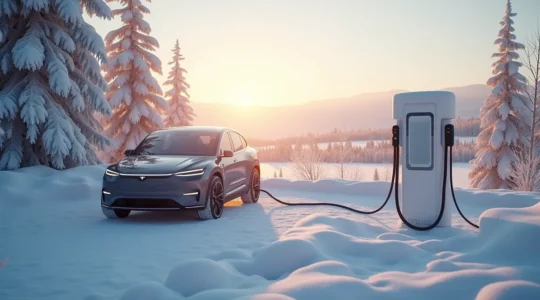
Extending EV Battery Life: Myths vs. Reality in Cold Climates
Contrary to popular belief, protecting your EV battery in a Canadian winter isn’t about following rigid rules, but about minimizing its underlying electrochemical stress. Charging to 100% or fast-charging are not inherently “bad,” but their impact is amplified by cold,…
Read more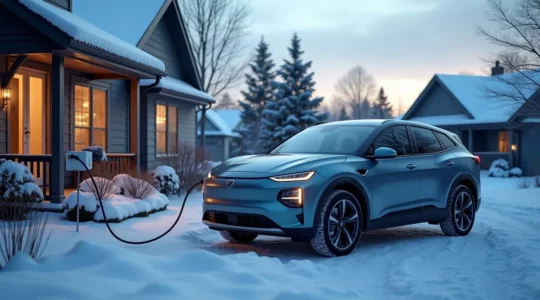
Plug-In Hybrids: The Smartest Choice for Canadian Suburbs?
A PHEV’s value for a Canadian suburban family isn’t a given; it’s earned through disciplined daily use that goes far beyond simply driving. Success requires mastering winter thermal management to protect electric range and strategically using “Save Mode” on highways…
Read more
Going Fully Electric in Rural Canada: Is It Viable in 2024?
Yes, going fully electric is viable in rural Canada, but only if you abandon the gasoline mindset and adopt a new “energy management” approach to driving. Winter range loss is significant but manageable with strategies like preconditioning and localized heating….
Read more