Daily maintenance and use
Every Canadian driver faces a unique challenge: maintaining a vehicle in one of the world’s most demanding automotive environments. From temperatures that swing 60 degrees Celsius between summer and winter to road salt applications that canTotal over 5 million tonnes annually across the country, daily vehicle care in Canada requires knowledge that goes far beyond generic manufacturer recommendations.
The difference between a vehicle that lasts 150,000 kilometers and one that reaches 300,000 isn’t luck—it’s the accumulation of small, consistent daily practices. This comprehensive resource connects the critical aspects of routine vehicle care, from fuel economy strategies that address Canada’s tax structure to protecting advanced driver assistance systems from Prairie winter storms. Whether you’re a new driver in Vancouver’s mild climate or a seasoned commuter navigating Montreal’s pothole-riddled streets, understanding these interconnected maintenance principles will save you thousands of dollars and countless roadside emergencies.
Mastering Fuel Economy in Canadian Conditions
Fuel costs represent one of the largest ongoing expenses for Canadian drivers, with federal and provincial taxes accounting for roughly 30-40% of the pump price depending on your location. Understanding how to minimize consumption isn’t just about saving money—it’s about recognizing how Canadian winter conditions fundamentally change your vehicle’s efficiency equation.
Winter Idling and Block Heater Economics
The mythology surrounding winter idling persists despite modern engine technology making extended warm-ups unnecessary. Today’s fuel-injected engines reach optimal operating temperature more quickly through gentle driving than idling. A common misconception is that letting your car idle for 10-15 minutes protects the engine; in reality, 30 seconds to one minute is sufficient for oil circulation before driving away gently.
Block heaters present a different calculation. A standard 400-600 watt block heater running for four hours before a cold start consumes approximately 2 kWh of electricity. At typical Canadian residential rates, this costs roughly 25-30 cents but can improve cold-weather fuel economy by 10-15% on the first trip and significantly reduces engine wear. The investment pays for itself when temperatures drop below minus 15 degrees Celsius, which is routine across most Canadian provinces for several months each year.
Fuel Grade Selection and Pricing Strategy
The octane rating debate confuses many drivers. Unless your vehicle specifically requires premium fuel (typically turbocharged or high-compression engines), using 87 octane regular provides identical performance to higher grades. The price premium of 15-20 cents per liter for premium fuel adds up to hundreds of dollars annually with no benefit for most vehicles.
More impactful is timing your fuel purchases strategically. Prices in Canada typically rise before long weekends and drop mid-week. Apps tracking local station prices can identify differences of 10 cents per liter within the same city. For someone filling a 60-liter tank weekly, choosing the right station and timing can save over $300 annually—far more than any fuel additive or premium grade could provide.
Protecting Your Investment from Canadian Elements
The combination of road salt, moisture, and temperature cycling creates an aggressive corrosion environment. Transport Canada studies have shown that vehicles in salt-belt regions experience rust formation at rates three to five times higher than those in dry climates. The difference between a rust-free 10-year-old vehicle and one with compromised structural integrity often comes down to preventive measures taken in the first few winters.
The Rust Battle: Prevention Versus Repair
Rustproofing methods divide into two main categories: barrier treatments (oil-based sprays) and sealants (rubberized coatings). Oil-based treatments like Krown or Rust Check work by creeping into seams and cavities, displacing moisture and creating a self-healing film. These require annual application and cost $100-150, but they reach areas that rubberized undercoating cannot.
The critical window for rust protection is simple: apply treatments to new or rust-free vehicles before the first winter, ideally in late fall. Once surface rust begins, treatments slow progression but cannot reverse existing damage. Think of it like sunscreen—it prevents damage but doesn’t heal a sunburn that’s already occurred.
Undercarriage Care Through Winter Months
The undercarriage bears the brunt of road salt exposure, particularly in wheel wells where slush accumulates. A practical maintenance routine involves:
- Weekly wheel well inspection during active salt season (January through March in most regions)
- Removing packed snow and ice that traps moisture against metal surfaces
- Washing the undercarriage when temperatures rise above freezing, particularly after salt application periods
- Paying attention to the rear trailing edges of wheel wells, where water pools and rust typically initiates
Many car washes offer undercarriage rinses, but their effectiveness varies dramatically. High-pressure touchless washes remove salt more effectively than cloth systems that simply spread contaminated water. However, washing during active freeze-thaw cycles can trap water in cavities where it freezes and expands, potentially causing more harm than good.
Daily Inspection Routines That Save Money
Professional mechanics often say that the most expensive repairs are those that could have been prevented with earlier detection. A systematic daily walk-around takes less than three minutes but can identify issues before they escalate from minor adjustments to major failures.
The Five-Minute Walk-Around
Start with the tires—not just kicking them, but actually looking. Modern tire pressure monitoring systems (TPMS) only alert you when pressure drops 25% below specification, meaning you could be driving on significantly under-inflated tires without warning. Visual inspection reveals uneven wear patterns that indicate alignment issues, bulges that signal internal failure, and embedded debris that could cause sudden deflation.
Check the ground beneath where your vehicle was parked. Fresh fluid indicates active leaks, and snow-covered driveways actually make this easier—bright green antifreeze, amber or brown oil, or pink power steering fluid stand out clearly against white snow. The location of the leak matters: center-front suggests radiator or coolant hoses, center-rear indicates transmission or differential, while driver-side front points to brake fluid or power steering issues.
Reading Your Vehicle’s Warning Signs
Modern vehicles communicate problems through multiple channels beyond dashboard lights. Hesitation when starting in cold weather progressively worsening over several days indicates a battery approaching failure—the typical warning window is about two to three weeks before complete failure. This gives you time to replace it at your convenience rather than during a minus-30 morning emergency.
Lighting systems deserve daily verification, particularly in winter when darkness extends commuting hours. A solo driver can check brake lights by backing up to a garage door or window and watching the reflection. Sensor cleanliness is equally critical for vehicles with adaptive cruise control, automatic emergency braking, or lane-keeping assist—a snow or salt-film covering a forward radar unit essentially disables these safety systems.
Understanding Maintenance Schedules for Extreme Climates
Manufacturer maintenance schedules typically include “normal” and “severe” service intervals. Many Canadian drivers don’t realize that their conditions qualify as severe: frequent short trips (under 8 kilometers), extensive idling, dusty conditions, or operation in extreme temperatures. This classification can cut recommended service intervals in half.
Cold Weather Component Priorities
Certain components face accelerated stress in Canadian climates. Timing belts in interference engines represent a critical concern—if this belt fails in an interference design, valves and pistons collide, causing thousands of dollars in damage. Cold temperatures make rubber belts brittle, and while manufacturers might recommend replacement at 160,000 kilometers, mechanics in Saskatchewan or Northern Ontario often suggest 120,000-140,000 kilometers given the thermal stress.
Battery life in extreme cold climates averages three to four years compared to five to six years in temperate zones. Warning signs include slow cranking on cold mornings, dimming headlights at idle, and the battery being more than three years old. Having it load-tested in early fall—before the first cold snap—prevents the all-too-common scenario of discovering failure on the coldest morning of the year.
Fluid Management Across Seasons
Brake fluid absorbs moisture over time, and water contamination lowers its boiling point while accelerating internal corrosion. In provinces using heavy road salt, this process accelerates. Fresh brake fluid is clear to light amber; dark brown fluid indicates oxidation and moisture contamination. Most manufacturers recommend changing it every three years, but in Canadian conditions, every two years provides better protection.
Coolant choice matters more than many realize. Traditional green ethylene glycol coolant oxidizes faster and should be changed every two years. Extended-life coolants (usually orange or pink) last five years but cost more initially. In extreme cold climates, verifying that coolant protection extends to at least minus 40 degrees Celsius prevents potentially catastrophic freeze damage.
Windshield washer fluid rating seems trivial until you’re driving in a salt spray at minus 25 degrees and your fluid freezes on the windshield. Ratings down to minus 40 or minus 45 degrees Celsius are essential for Prairie and Northern drivers, while minus 30 suffices in Southern Ontario or coastal British Columbia.
Modern Vehicle Technology and Sensor Care
The rapid adoption of advanced driver assistance systems (ADAS) in Canadian vehicles introduces new maintenance requirements. Systems that seem futuristic—adaptive cruise control, automatic emergency braking, lane departure warning—depend on sensors and cameras maintaining clear “vision” of the road environment.
Keeping ADAS Systems Functional
Forward-facing cameras typically mount behind the rearview mirror, viewing the road through the windshield. This location makes them vulnerable to winter windshield contamination. Hydrophobic coatings applied to the exterior windshield help water and slush sheet off rather than accumulating. These treatments last several months and cost $20-30 for DIY application or $75-100 professionally applied.
Some manufacturers integrate heating elements into sensor housings to melt snow and ice accumulation. These systems work automatically but have limits—they can’t clear heavy wet snow or ice buildup that occurs during parking. A soft brush dedicated to clearing sensors should be part of your winter vehicle kit, never scrapers or rough materials that could scratch lenses or damage protective coatings.
Salt, Sensors, and Safety
Road salt creates a film that’s invisible to drivers but opaque to radar and camera systems. This explains why adaptive cruise control or automatic emergency braking might disengage during winter highway driving, displaying warnings about “reduced functionality.” The solution is simple but requires awareness: sensor cleaning should be part of every fuel stop during winter months, not just windshield cleaning.
When sensors fail or become obscured, understanding how to drive without these assistive technologies becomes critical. This doesn’t mean they’re unreliable—it means Canadian drivers need to maintain them properly and recognize when they’re offline, reverting to traditional driving techniques rather than trusting systems that have warned they’re compromised.
Driving Habits That Extend Vehicle Life
The concept of mechanical empathy—driving in ways that minimize wear and stress on vehicle components—separates owners who get exceptional longevity from those facing frequent repairs. Small habit changes compound over years and hundreds of thousands of kilometers.
Mechanical Empathy in Practice
Short trips (under 8 kilometers) are surprisingly hard on vehicles. Engines don’t reach full operating temperature, meaning fuel combustion remains incomplete and condensation accumulates in oil and exhaust systems. In Canadian winters, this problem intensifies. A vehicle used primarily for short commutes might need oil changes at 5,000 kilometers rather than the 8,000-12,000 kilometer intervals recommended for highway driving.
The “Italian tune-up” myth—that occasionally driving aggressively at high RPM cleans carbon deposits—contains a kernel of truth wrapped in potential harm. Modern engines do benefit from occasionally reaching full operating temperature and using the upper portion of the RPM range, but this doesn’t mean aggressive acceleration or excessive speeds. A monthly highway drive at posted speed limits accomplishes the same carbon-clearing effect without the mechanical stress of hard acceleration.
The Real Cost of Aggressive Driving
Hard acceleration and aggressive braking don’t just burn more fuel—they accelerate wear on multiple expensive systems. Brake pads that might last 80,000 kilometers under gentle driving can wear out in 40,000 kilometers when habitually used aggressively. The immediate fuel cost is measurable: aggressive driving can reduce fuel economy by 15-30% in city conditions, translating to hundreds of dollars annually.
Turbocharged engines require special consideration. Shutting down immediately after hard driving doesn’t allow the turbo to cool gradually, potentially cooking oil in the turbo bearings and shortening their lifespan dramatically. A simple habit—idling for 30-60 seconds after highway driving before shutdown—allows temperatures to normalize and oil to continue circulating. For daily commuting in stop-and-go traffic, this isn’t necessary since the engine isn’t working hard enough to heat-soak the turbocharger.
Daily maintenance isn’t about following every possible recommendation or achieving perfection—it’s about understanding which practices matter most for your specific vehicle, usage pattern, and climate. The interconnected nature of these maintenance aspects means that neglecting one area often creates cascading problems in others. A vehicle is a complex system, but the daily care it requires is surprisingly straightforward when you understand the underlying principles. The drivers who master these fundamentals don’t just save money; they develop a relationship with their vehicles that transforms transportation from a source of stress into a reliable tool that serves them well for many years.
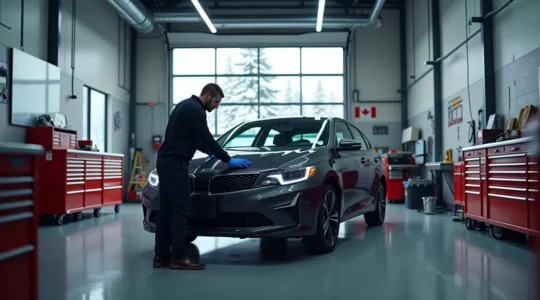
Driving for Longevity: The Engineering Habits That Double Your Car’s Life in Canada
True vehicle longevity isn’t about following a maintenance schedule; it’s about developing “mechanical empathy” to minimize the physical stresses your driving imposes on components. Short trips of less than 5km are one of the worst things for an engine, as…
Read more
Sensor Blindness: Keeping Your Smart Car “Seeing” in Slush
That “Radar Obstructed” warning on your dashboard during a light Canadian snow flurry isn’t just an annoyance; it’s a symptom of “sensor blindness.” The issue isn’t simply that your sensors are dirty. The real problem lies in the materials science…
Read more
Extreme Cold Fluid Dynamics: Why -40°C Rewrites the Rules for Your Car
At -40°C, following standard fluid check procedures can actively damage your vehicle; the key isn’t just using ‘winter’ products, but understanding the altered physics governing your car’s liquids. Fluids like washer fluid can freeze on your windshield *because* of highway…
Read more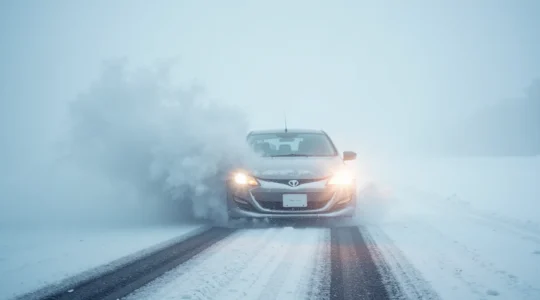
The “Severe Service” Trap: Why Your Manual Says You Need More Oil Changes
Many drivers think the ‘severe service’ schedule is a dealership upsell. The reality is that for a vast majority of Canadians, ‘normal’ driving is severe driving. This guide explains the hidden mechanical stresses—from engine condensation on short trips to thermal…
Read more
The 60-Second “Circle Check” That Saves Canadian Commuters From Morning Breakdowns
Morning car breakdowns are preventable, but not with long, complex checklists. A disciplined 60-second sensory check is more effective than a random walk-around. Your eyes and ears can detect failures (tires, belts, fluids) long before a warning light appears. Canadian…
Read more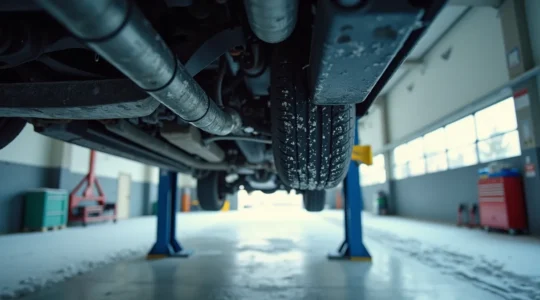
Rustproofing 101: How to Preserve Mechanical Strength Against Road Salt?
Contrary to popular belief, effective rustproofing is not about a single pre-winter application, but about interrupting a year-round electrochemical reaction with the right science. Annual, dripless oil sprays are scientifically proven to work via capillary action, while electronic modules are…
Read more
How to Prevent Chronic Back Pain on Long Canadian Road Trips?
In summary: Chronic driving pain stems from specific, repeated “biomechanical micro-aggressions” like spinal twisting and pelvic tilt, not just sitting too long. Your seat setup is a dynamic system. Correct lumbar support should fill the natural curve of your lower…
Read more
How to Cut Your Fuel Bill by 20% Despite Canada’s Rising Carbon Tax?
In summary: Idling your car in winter is a major fuel drain; a block heater offers significant savings for a minimal electricity cost. Smooth, predictive driving habits can reduce fuel consumption by up to 35% in city traffic. Timing your…
Read more