Blog
Canada’s diverse automotive landscape presents unique opportunities and challenges for vehicle owners. From navigating harsh winter conditions in Edmonton to managing Vancouver’s congestion pricing zones, Canadian drivers face scenarios that demand both knowledge and adaptability. Whether you’re looking to enhance your vehicle’s performance, reduce the stress of daily commuting, or bring modern technology to an older car, understanding the practical and legal dimensions of these decisions is essential.
This resource explores the core topics that matter most to Canadian vehicle owners: optimizing performance within provincial regulations, making daily drives more efficient and comfortable, upgrading aging vehicles with contemporary features, and mastering the urban driving challenges specific to Canadian cities. Each section connects fundamental concepts with actionable insights, providing you with the foundation to make informed decisions about your vehicle and driving habits.
Understanding Performance Enhancement Within Legal Boundaries
Performance modifications attract enthusiasts across Canada, but the regulatory landscape varies significantly between provinces. What’s permissible in Alberta may trigger inspection failures in Ontario or Quebec, making it crucial to understand both the technical aspects of modifications and their legal implications before investing time and money.
The Regulatory Framework for Vehicle Modifications
Each Canadian province maintains specific standards for vehicle modifications, typically enforced through safety inspections. Transport Canada sets federal guidelines, but provincial authorities like Ontario’s Drive Clean program or British Columbia’s AirCare successor implement their own testing protocols. Modifications affecting emissions systems face particularly strict scrutiny, with catalytic converter removal or ECU tuning that bypasses emissions controls often resulting in failed inspections and potential fines ranging from several hundred to thousands of dollars.
Before modifying your vehicle, consult your provincial motor vehicle branch’s technical standards. Saskatchewan’s SGI, for instance, maintains detailed modification guidelines that differ from Nova Scotia’s Registry of Motor Vehicles requirements.
Bolt-On Modifications Versus Electronic Tuning
Bolt-on modifications involve physical component replacements—cold air intakes, exhaust systems, or suspension upgrades—while ECU tuning reprograms your engine’s computer to alter fuel delivery, ignition timing, and boost pressure. The distinction matters legally: bolt-ons are generally easier to reverse for inspections, whereas ECU modifications may leave digital footprints detectable during emissions testing.
High-flow air filters represent one of the safest entry points for performance enhancement. Unlike complete intake systems, quality filters from manufacturers like K&N or AEM can improve airflow while maintaining emissions compliance. The performance gains are modest—typically 3-5 horsepower—but they’re accompanied by improved engine sound and potential fuel economy benefits during highway driving.
Synthetic Oils and Tire Pressure Optimization
Performance doesn’t always require modifications. Switching to full synthetic oils offers measurable benefits for Canadian climates, particularly during winter cold starts. Products like Mobil 1 0W-40 or Castrol Edge 5W-30 maintain viscosity across temperature extremes, protecting turbocharged engines under high stress while improving cold-weather startability—critical when temperatures in Winnipeg or Yellowknife plummet below -30°C.
Tire pressure adjustments offer another no-modification optimization strategy. Running pressures at the upper end of manufacturer specifications (typically found on the driver’s door jamb) can improve fuel economy by 2-3% but may compromise ride comfort. Conversely, slightly lower pressures enhance grip and comfort at the expense of economy—a worthwhile trade-off for spirited driving on winding roads through the Rockies or Laurentians.
Maximizing Daily Commuting Efficiency and Comfort
For most Canadian vehicle owners, daily commuting represents the majority of driving time. Optimizing this experience involves strategic planning, vehicle selection, and environmental adjustments that collectively reduce stress, save time, and minimize costs.
The True Economics of Commuting by Car
When calculating commuting costs, many drivers focus solely on fuel expenses while overlooking depreciation, maintenance, insurance, and parking. A realistic assessment for a typical Canadian commuter driving 20,000 kilometers annually might reveal total costs of $8,000-12,000 yearly when including:
- Fuel costs (varying significantly by province, with Vancouver typically highest)
- Depreciation (often the largest expense, averaging $3,000-5,000 annually)
- Insurance (ranging from $1,200 in Quebec to over $2,000 in Ontario)
- Maintenance and repairs (tires, oil changes, brake service)
- Parking fees (downtown Toronto monthly parking can exceed $300)
This comprehensive view often makes alternatives like carpooling or car-sharing more attractive than initial impressions suggest, particularly for urban dwellers with access to public transit for non-work trips.
Navigation Technology and Route Optimization
Modern navigation applications offer dramatically different experiences for Canadian drivers. Google Maps excels at real-time traffic data in major metropolitan areas, while Waze leverages crowd-sourced information about speed traps, road hazards, and accidents—particularly valuable on highways like the 401 through Toronto or the Trans-Canada through Montreal. Apple Maps has improved significantly, offering superior integration for iPhone users and increasingly accurate arrival times.
Construction season—jokingly called Canada’s “second winter”—demands flexible routing. Apps that integrate construction data can save 15-30 minutes daily during major projects like Toronto’s Gardiner Expressway rehabilitation or Montreal’s perpetual orange cone installations.
Vehicle Selection and Cabin Optimization for Daily Drives
The ideal commuter vehicle balances fuel efficiency, reliability, and comfort. Compact SUVs like the Honda CR-V or Toyota RAV4 dominate Canadian sales partly because they handle winter conditions while offering reasonable fuel economy. For pure city commuting where winter severity is moderate (Vancouver, Victoria), vehicles like the Mazda3 or Honda Civic provide superior fuel economy and parking maneuverability.
Cabin environment significantly impacts commuting stress. Simple adjustments make measurable differences: seat position affecting lower back comfort during hour-long commutes, climate control settings that prevent drowsiness, and audio content choices. Many commuters report that switching from music to podcasts or audiobooks transforms perceived commute time from “wasted” to productive or educational.
Carpooling and HOV Lane Access
High Occupancy Vehicle lanes offer substantial time savings in cities where they exist. Toronto’s HOV lanes on highways like the 404 and QEW can reduce commute times by 20-30% during peak periods. Organized carpooling through workplace programs or apps like Poparide connects commuters traveling similar routes, splitting costs while gaining HOV access and reducing individual driving fatigue.
Modernizing Older Vehicles With Contemporary Technology
Vehicles depreciate rapidly, but functional lifespans continue extending. A well-maintained vehicle from the early 2010s can reliably serve for years, but lacks modern conveniences like smartphone integration, advanced safety features, and comfort enhancements available through aftermarket upgrades.
Smartphone Integration Systems
Adding Apple CarPlay or Android Auto capability to older vehicles ranks among the most impactful upgrades available. Aftermarket head units from Pioneer, Kenwood, or Sony range from $300-800, with professional installation adding $100-300 depending on vehicle complexity. The investment transforms the driving experience by enabling:
- Voice-controlled navigation without mounting phones to windshields
- Hands-free messaging and calling through vehicle speakers
- Seamless music streaming from Spotify, Apple Music, or podcast apps
- Integration with vehicle steering wheel controls in most installations
For vehicles with complex dashboard designs or integrated climate controls, dash-mounted tablet solutions offer alternatives, though they lack the seamless integration of properly installed head units.
Sound Deadening and Acoustic Comfort
Older vehicles, particularly economy models, often feature minimal sound insulation. Road noise, wind noise, and tire roar increase fatigue on longer drives. Sound deadening materials like Dynamat or Noico applied to door panels, floor pans, and wheel wells can reduce interior noise levels by 30-50%, creating a noticeably more refined driving environment. Material costs range from $150-400 for a complete sedan treatment, with installation being straightforward for mechanically inclined owners or adding $300-600 for professional installation.
Lighting, Controls, and Remote Start
LED lighting upgrades improve visibility while reducing electrical load. Replacing halogen headlight bulbs with quality LED alternatives (ensuring they’re legal in your province) can double effective nighttime visibility range—particularly valuable during Canadian winter’s extended darkness periods. Interior LED conversions eliminate the yellowish glow of incandescent bulbs while drawing minimal power.
Aftermarket steering wheel upgrades remain niche but can significantly improve the tactile experience, particularly for older vehicles with worn or poorly designed original wheels. Remote start systems offer exceptional value in Canadian climates, allowing engine warming and cabin preheating during winter. Professional installation costs $300-600, with the comfort of entering a pre-warmed vehicle during February in Saskatoon or Halifax making the investment worthwhile for many owners.
Mastering Urban Driving Challenges Across Canadian Cities
Canadian urban driving presents distinct challenges shaped by climate, infrastructure age, and rapid population growth in major metropolitan areas. Understanding city-specific regulations and leveraging appropriate tools reduces frustration and saves time.
Congestion, Restrictions, and Ownership Alternatives
Major Canadian cities increasingly implement measures to manage traffic congestion. Vancouver has tested variable pricing, Toronto continues expanding its network of dedicated transit and HOV lanes, and Montreal’s complex one-way street systems confound newcomers. These realities raise valid questions about whether car ownership remains optimal for urban dwellers.
Car-sharing services like Communauto, Evo (Vancouver), or traditional rentals offer compelling economics for drivers logging fewer than 10,000 kilometers annually, particularly when parking costs exceed $150 monthly. The calculation shifts for families, suburban residents, or those requiring vehicles for work, but urban singles and couples should periodically reassess whether ownership truly serves their needs.
Winter Parking and Snow Removal Logic
Canadian winter parking regulations confuse even experienced drivers. Montreal’s notorious street-sweeping and snow-removal parking bans rotate sides on schedules requiring dedicated attention. Missing the signs results in tickets, towing, or both. Apps like Info-Neige Montreal or similar municipal offerings send notifications about upcoming bans and operations.
The logic behind alternating parking bans centers on providing snow removal equipment access to entire street lengths. Understanding this system—and planning alternative parking during operations—prevents costly mistakes. Many buildings offer overnight visitor parking that can serve as refuges during street cleaning periods.
Parking Apps and Start-Stop Technology
Finding parking in downtown cores of Toronto, Vancouver, or Calgary benefits tremendously from dedicated apps. HonkMobile, PayByPhone, and ParkWhiz operate across Canadian cities, allowing drivers to locate, reserve, and pay for parking without feeding meters or displaying paper receipts. Real-time availability updates save the circling time that wastes fuel and increases stress.
Modern vehicles equipped with start-stop systems automatically shut off engines at traffic lights, restarting instantly when the brake releases. While fuel savings are modest in isolation (3-5% in urban driving), the collective environmental impact is significant. Canadian drivers sometimes disable these systems during winter, fearing battery strain during cold starts, though modern systems account for temperature and battery state of charge, disabling automatically when conditions aren’t optimal.
Construction Season Route Planning
Canadians joke that the seasons are winter, still winter, construction, and almost winter. Major infrastructure projects seemingly time themselves to maximize disruption, with projects like Calgary’s ring road completion, Ottawa’s LRT expansion, or perpetual Montreal bridge work creating navigation challenges. Successful construction-season commuting requires:
- Monitoring city and provincial transportation websites for project timelines
- Using navigation apps with real-time construction data integration
- Developing alternative routes before primary routes close
- Adjusting departure times to avoid peak construction activity periods
Understanding that construction aims to improve long-term infrastructure—even while creating short-term frustration—helps maintain perspective during detour-heavy summers.
Vehicle ownership and operation in Canada involves navigating a unique combination of climate extremes, regulatory variations, and urban challenges. By understanding performance modification legalities, optimizing daily commuting strategies, selectively upgrading older vehicles, and mastering city-specific driving dynamics, you can significantly enhance both your vehicle’s capabilities and your overall driving experience. Each topic explored here connects to deeper specialized knowledge, allowing you to pursue areas most relevant to your specific situation and needs.
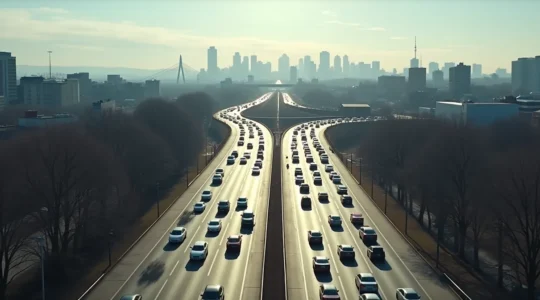
The Urban Jungle: Surviving Traffic and Parking in Montreal & Toronto
Driving in Toronto and Montreal is less about the car and more about mastering a complex system; this guide is the strategic playbook to win the game. Uncover and eliminate thousands in hidden “financial leakage” from your commute, beyond just…
Read more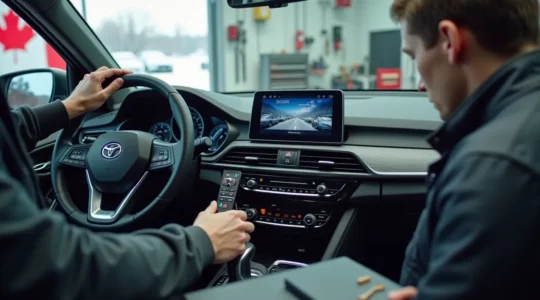
Modernizing Your Ride: Adding 2024 Tech to a 2010 Car
Upgrading an older car isn’t about buying gadgets; it’s about making smart, integrated choices that are safe and reliable for Canadian conditions. Full head unit replacements offer a seamless, factory-like experience that standalone screens can’t match. Safety and legality must…
Read more
How to Reclaim 3 Hours a Week on Your Commute in Toronto or Montreal?
Your daily commute in Toronto or Montreal is costing you more than just time; it’s a significant financial and mental drain that can be systematically optimized. Hidden costs of car ownership can exceed $19,000 annually, far more than strategic alternatives…
Read more
How to Legally Boost Engine Performance in Canada—Without Voiding Your Warranty
The biggest risk to tuning your car in Canada isn’t the modification itself, but the lack of proof that you’ve done it correctly and legally. ECU tunes are almost instantly detectable by dealers, making them a primary warranty risk. Exhaust…
Read more